
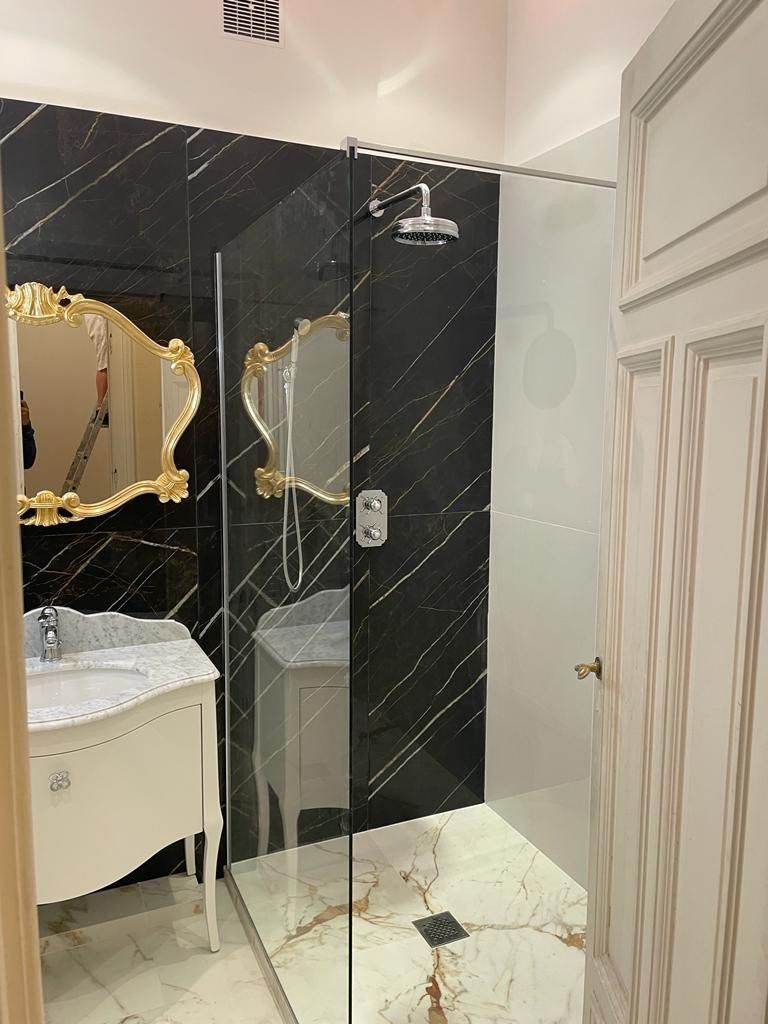
Bathroom Renovation on the French Riviera: A Practical Guide
The bathroom is one of the most frequently renovated rooms in any home — and for good reason. A well-designed bathroom adds tangible value to a property, improves daily comfort, and can transform an outdated space into a genuine sanctuary. On the French Riviera, where the property market commands some of the highest prices per square metre in France, a quality bathroom renovation is one of the smartest investments you can make.
Whether you own a seafront apartment in Nice, a villa in Mougins, or a pied-à-terre in Cannes, the Côte d'Azur presents specific challenges for bathroom renovation: ageing plumbing in older buildings, strict co-ownership regulations, the corrosive effects of the coastal climate, and the expectations of a discerning market. This guide walks you through the five key steps to a successful bathroom renovation on the French Riviera, with practical advice drawn from over a decade of experience.
Step 1: Define Your Needs and Style
Before any demolition begins, you need a clear vision. A bathroom renovation is not simply about replacing tiles and fixtures — it is about rethinking how the space works for you and the people who live in your home.
Assess your current bathroom honestly
Start by identifying what frustrates you about the existing space. Is it a lack of storage? Poor lighting? An impractical layout that wastes square metres? A draughty window? Cracked grout that never stays clean? Write everything down. This list becomes the foundation of your brief to the renovation team.
Choose a design direction
Bathroom design on the Côte d'Azur tends to follow two broad directions. The first is a contemporary, minimalist aesthetic — clean lines, large-format tiles, wall-hung sanitaryware, frameless glass shower screens, and a neutral colour palette with natural stone accents. This style is particularly popular in modern apartments and recently built villas.
The second is a classic Mediterranean approach — warmer tones, natural materials such as travertine and terracotta, freestanding bathtubs, and brassware with a brushed gold or antique finish. This works beautifully in older properties with character, including Belle Époque apartments and Provençal houses.
Italian showers: the dominant trend
The douche à l'italienne (walk-in shower with a flush floor drain) has become the most requested feature in bathroom renovations across the French Riviera. It offers a sleek, accessible design that maximises the sense of space — particularly valuable in compact Riviera apartments. However, installing one in an older building requires careful attention to floor levels, waterproofing, and drainage gradients. More on this in the following sections.
Double vanity units
For family bathrooms and master en-suites, a double vanity with two basins is both a practical upgrade and a design statement. Wall-mounted units are preferred as they make floor cleaning easier and create a lighter, more spacious feel. Consider integrated LED lighting beneath the vanity and behind the mirror for a polished, hotel-like finish.
Step 2: The Importance of Plumbing
Plumbing is the invisible backbone of any bathroom. On the French Riviera, where a significant proportion of the housing stock dates from the 1960s and 1970s — or even earlier in the old towns of Nice, Menton, and Antibes — the plumbing infrastructure often needs serious attention during a renovation.
Common issues in older buildings
Many apartments on the Côte d'Azur still have original galvanised steel or lead supply pipes that are well past their service life. These can cause low water pressure, rust discolouration, and in some cases pose a health risk. During a bathroom renovation, we strongly recommend replacing all supply pipes with modern copper or PER (cross-linked polyethylene) pipework. This is a one-time investment that prevents problems for decades to come.
Waste pipes in older buildings present their own challenges. Cast iron stacks are common in post-war apartment blocks along the coast. While these are generally robust, the connections between individual apartments and the main stack can deteriorate, causing leaks that damage neighbouring properties. Your plumber should inspect and, if necessary, replace these connections as part of the renovation.
Co-ownership regulations
In a copropriété (co-ownership building), the main waste stack and supply risers are classified as common areas (parties communes). Any work that involves connecting to or modifying these elements typically requires notification to the syndic (property management company) and, in some cases, approval from the co-owners' general assembly. Your contractor should be familiar with these procedures and manage them on your behalf.
Hot water and energy efficiency
A bathroom renovation is the ideal time to review your hot water system. If you are replacing an old electric water heater, consider upgrading to a thermodynamic model (chauffe-eau thermodynamique), which uses ambient air to heat water and can reduce energy consumption by up to 70%. These units are eligible for various French government subsidies, including MaPrimeRénov'.
Step 3: Waterproofing — The Key Challenge
Waterproofing is arguably the single most critical element of any bathroom renovation. A failure here can lead to catastrophic consequences: water damage to your own property, damage to the apartment below, mould growth, and costly repairs. On the Côte d'Azur, the combination of high humidity and significant temperature variations between seasons makes proper waterproofing even more essential.
The SPEC (système de protection à l'eau sous carrelage) approach
French construction standards require a tanking system beneath the tiles in wet areas. This typically involves a liquid-applied waterproofing membrane (such as those manufactured by Weber, Mapei, or Sika) applied in two coats to the floor and walls of the shower area, with reinforced tape at all corners and joints. The membrane must extend at least 10 centimetres beyond the shower area on the floor and to a minimum height of 2 metres on the walls.
Italian shower waterproofing
For walk-in showers with a flush floor, the waterproofing requirements are even more demanding. The entire shower floor must be waterproofed as a single, continuous membrane with a carefully formed gradient towards the drain (typically 1 to 1.5% slope). The drain itself must be a certified model designed for integration with the membrane system. Any compromise here is an invitation for problems.
Coastal climate considerations
Properties near the seafront on the Côte d'Azur are exposed to salt-laden air and elevated humidity levels. These conditions can accelerate the degradation of grout, sealant, and poorly applied waterproofing. We recommend using epoxy grout in shower areas (more resistant to moisture and mould than standard cementitious grout) and high-quality silicone sealants with fungicidal properties. These cost more upfront but dramatically reduce maintenance over the life of the bathroom.
Step 4: Choosing Materials and Fixtures
The materials and fixtures you choose will define both the look and the longevity of your new bathroom. Quality matters enormously in a wet environment — cheap materials deteriorate quickly, while well-chosen products can look and perform like new for 15 to 20 years.
Tiles and surfaces
Large-format porcelain tiles (60×60 cm or 60×120 cm) remain the most popular choice for bathroom renovations on the French Riviera. They create a clean, expansive look with fewer grout lines, are extremely durable, and are available in an enormous range of finishes — including convincing reproductions of marble, concrete, and natural stone. For floor tiles in the shower area, choose a surface with an adequate anti-slip rating (R10 or R11 for bare feet).
Natural stone (marble, travertine, limestone) is a luxurious alternative that suits the Mediterranean context beautifully. However, it requires sealing and more careful maintenance than porcelain. If you choose natural stone, ensure your contractor has specific experience working with it — cutting, waterproofing, and sealing techniques differ significantly from standard tile installation.
Sanitaryware and brassware
For sanitaryware, European manufacturers such as Duravit, Villeroy & Boch, and Roca offer excellent quality and wide availability on the French market. Wall-hung WCs are now standard in quality renovations — they make the bathroom easier to clean and create a more spacious feel.
For taps and shower systems, Grohe and Hansgrohe are the most frequently specified brands in our projects. Thermostatic shower valves are highly recommended for both comfort and safety, maintaining a constant water temperature regardless of fluctuations in the building's supply. Rainfall shower heads (either ceiling-mounted or wall-mounted on a rail) are a popular upgrade that adds a sense of luxury without excessive cost.
Shower screens
Frameless glass shower screens in tempered safety glass (8 mm or 10 mm) are the standard choice for Italian showers. They maximise light transmission, are easy to clean (especially with a factory-applied anti-limescale coating), and create a seamless look. Fixed panels are preferred over hinged doors in smaller bathrooms, as they take up less space and have no moving parts to maintain.
Ventilation
Proper ventilation is essential to prevent condensation and mould. In most Riviera apartments, ventilation is provided by a VMC (ventilation mécanique contrôlée) — a centralised extraction system. During your renovation, ensure the VMC duct in the bathroom is clean, properly connected, and that the extraction rate is adequate for the room size. In bathrooms without a VMC connection, a standalone extractor fan with a humidity sensor is the recommended solution.
Heated towel rails
A heated towel rail (sèche-serviettes) is a small addition that makes a significant difference to daily comfort, particularly during the cooler months from November to March. Electric models with a programmable timer are the most practical option for bathrooms. They serve a dual purpose: warming your towels and providing supplementary heating to the room. Budget between €200 and €600 for a quality unit, depending on size and finish.
Step 5: Realistic Budget and Timeline
One of the most common questions we receive is: "How much does a bathroom renovation cost on the French Riviera?" The honest answer depends on the scope of work, the quality of materials, and the current condition of the space. However, we can provide useful ranges based on our experience.
Standard renovation: €5,000 to €15,000
This range covers a straightforward renovation of a bathroom of 4 to 8 square metres, including demolition of existing finishes, new waterproofing, tiling (quality porcelain), replacement of sanitaryware (WC, basin, shower or bathtub), new taps, a shower screen, lighting, and painting. Plumbing modifications are minor — connections remain in approximately the same positions. This is the most common type of bathroom renovation we carry out on the Côte d'Azur.
Premium renovation: €15,000 to €30,000
A premium renovation involves a more significant transformation. This may include reconfiguring the layout (moving the WC, adding a double vanity, converting a bathtub to an Italian shower), replacing all supply and waste pipework, installing underfloor heating, using high-end materials (natural stone, designer fixtures), and integrating smart features such as anti-fog mirrors, ambient lighting, and integrated Bluetooth speakers. Larger bathrooms (10+ square metres) and those requiring structural modifications will also fall into this range.
Timeline: 2 to 4 weeks
A standard bathroom renovation typically takes 2 to 3 weeks from demolition to completion. Premium renovations with layout changes and custom elements may require 3 to 4 weeks. These timelines assume that all materials have been ordered and delivered before work begins — a critical point, as delivery delays on specialty items (custom vanities, imported tiles, designer brassware) are one of the most common causes of project overruns.
We recommend finalising all material selections and placing orders at least 3 to 4 weeks before the planned start date. Your contractor should provide a detailed day-by-day schedule so you know exactly when each trade will be on site and when the bathroom will be ready to use.
Ready to Transform Your Bathroom?
At RUDEK Côte d'Azur, we have been renovating bathrooms across the French Riviera since 2012. From compact en-suites in Nice's Carré d'Or to spacious master bathrooms in Cannes villas, we bring the same commitment to quality, precision, and attention to detail to every project.
Our team handles every aspect of your bathroom renovation — design advice, plumbing, waterproofing, tiling, electrical work, and fixture installation — under a single contract with clear pricing and a guaranteed timeline. We work with the leading European brands and source materials from trusted local suppliers on the Côte d'Azur.
Whether you are planning a simple refresh or a complete transformation, we would be delighted to discuss your project and provide a detailed, no-obligation quote.